WDM bank stability
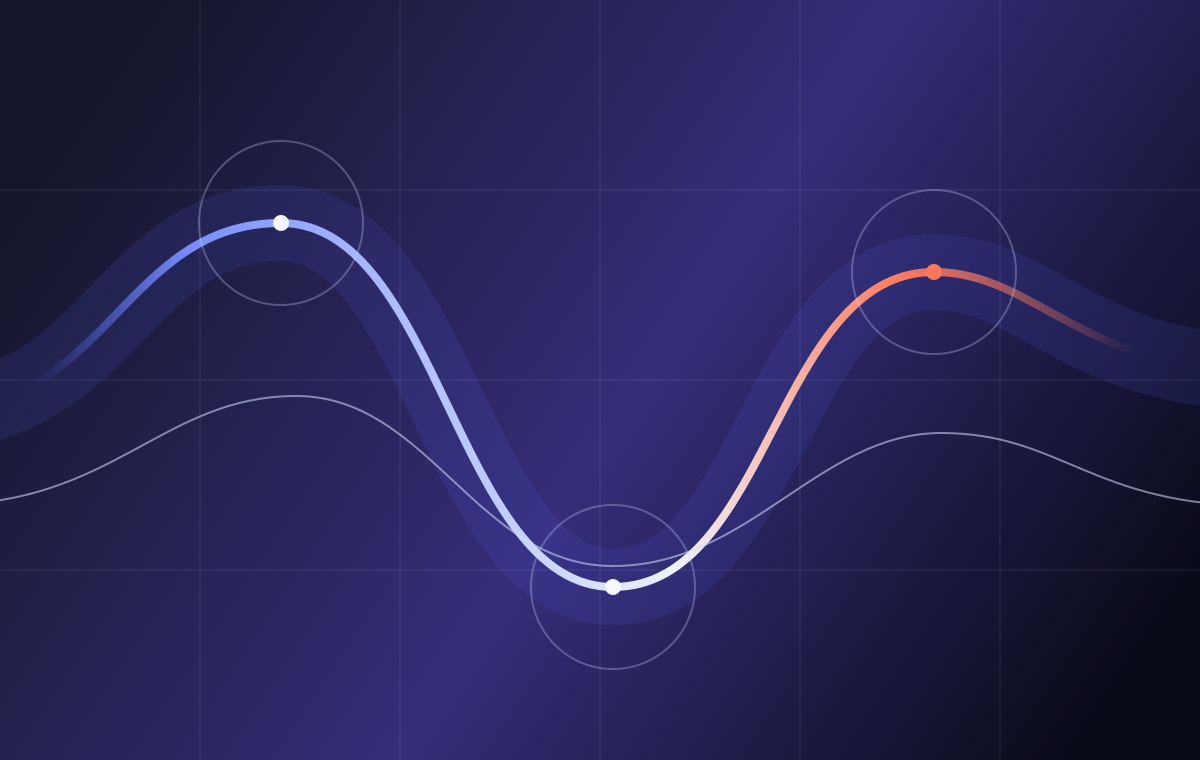
Joint thermal-drift estimation under serial monitoring, separating common and local dynamics.
Explore capabilityAGE turns temporal characterisation logs into measurable diagnostics and compensation paths tailored to each platform, PDK and version.
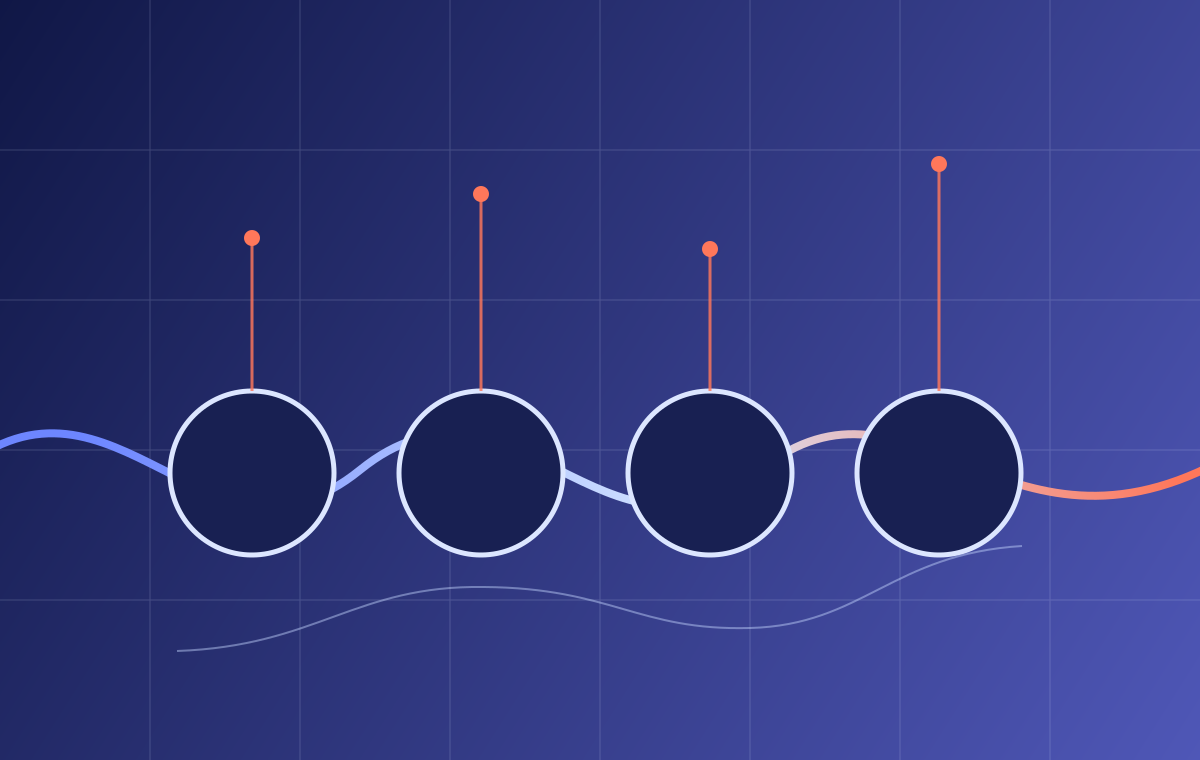
When devices share a substrate, package and environment, part of their dynamics is shared too. AGE identifies that common and local structure to estimate what improvement is actually achievable against the existing baseline.
We begin with data the team already owns. If no robust advantage appears on a held-out time segment, the answer is not to integrate. If it does, we engineer the next phase around the real monitor, actuator and platform constraints.
See the methodOne principle—learning temporal structure—applied with an explicit maturity level for every capability.
Joint thermal-drift estimation under serial monitoring, separating common and local dynamics.
Explore capabilityAdapting the estimator to the cadence, interfaces, actuators and exact PDK version.
View target platformsLinear and regularised receiver design to recover selectivity under temporal distortion.
View research trackThe open benchmark shows where gain appears and, more importantly, where it does not: a better single-ring filter buys only 6%. Cross-channel information is what changes the nominal result.
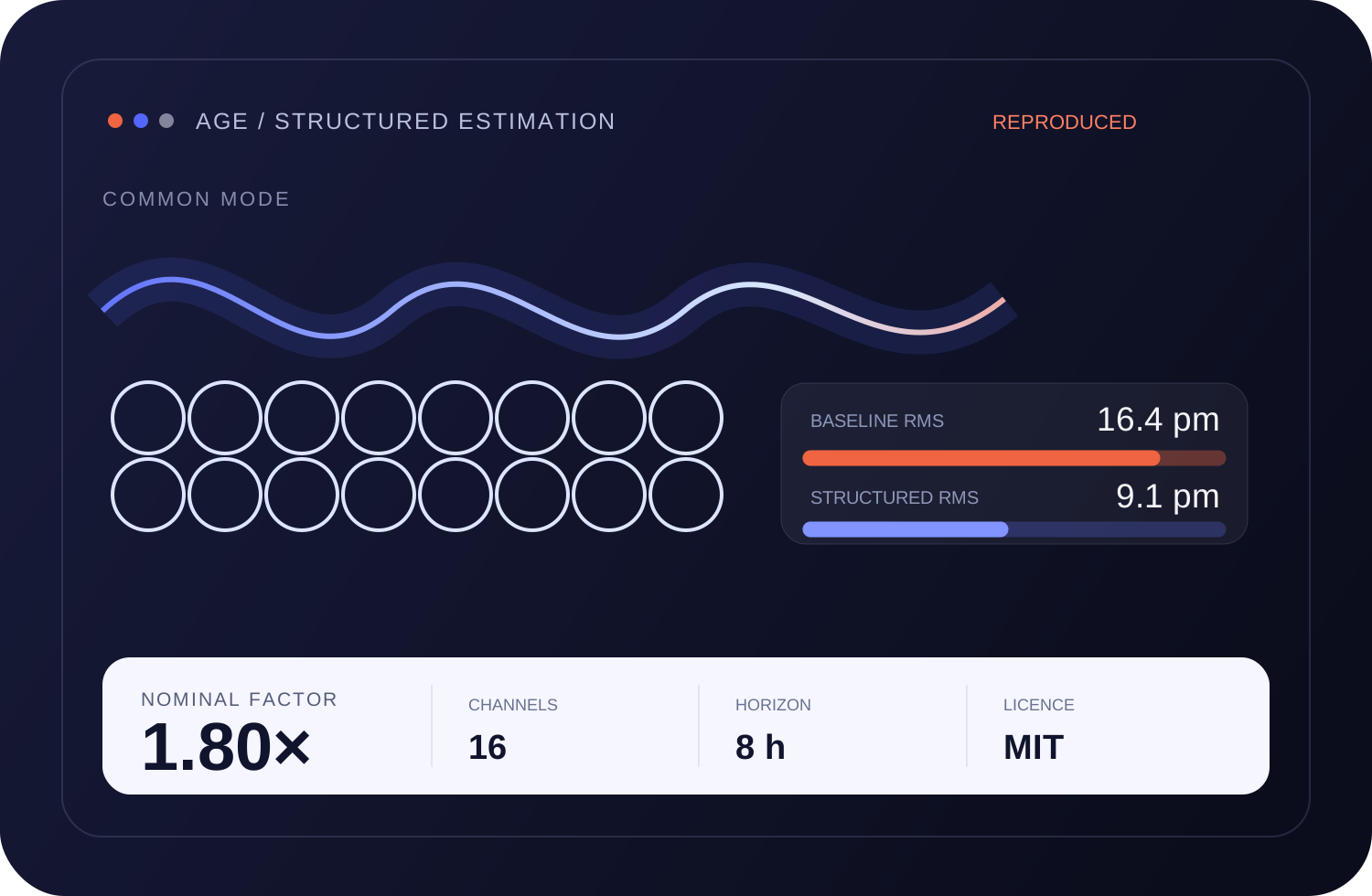
16 channels · 8 hours · 60 runs. This is simulation evidence, not a performance guarantee for a real platform.
The entry demonstration lets a foundry or photonics team assess AGE without changing hardware, transferring unnecessary IP or committing to integration in advance.
Review data requirementsFix the signal, period, baseline, metric and failure criterion before running.
Identify on one time block and score on another; the owner can keep the data on their machine.
Quantitative result, uncertainty, observed limitations and go / no-go recommendation.
No. The first phase uses existing logs and runs offline. Any integration is scoped only after measuring the opportunity.
Multichannel time series of wavelength, detuning, error or equivalent signal; timestamps; channel ID and, where relevant, actuator state.
No. They are target platforms or technical references. Naming them does not imply a commercial relationship, collaboration or endorsement.
We document the result and recommend not proceeding. Avoiding an integration without sufficient signal is a valuable outcome too.
Describe the platform and available log. Do not send confidential data in the first contact.